We earn a commission when you book through our links on Viator, at no extra cost to you.
I Learned to Snorkel Before I Learned to Ride a Bike
That's not an exaggeration. My grandfather lived in Loíza and every Sunday he'd take me to the reef off Piñones. He'd float on his back, point at parrotfish, and tell me their names in Spanish. By the time I was 10, I could hold my breath for two minutes and identify a dozen species. By 16, I was helping my uncle's tour company as a junior guide, mostly hauling fins and untangling mask straps, but I was in the water every single day.
Now, after 13 years of guiding professionally, I've taken thousands of people into the water off San Juan's coast. I've seen faces light up when a sea turtle glides past, and I've seen the disappointment when a tour promises marine life and delivers murky water and a hangover instead.
We earn a commission when you book through our links on Viator (PID P00303273), at no extra cost to you.
Snorkeling around San Juan falls into two categories: shore-based tours (you walk in from the beach) and boat-based excursions (catamarans to Culebra, Icacos, or offshore reefs). They're completely different experiences, and I'll break down both. But first, the most important thing: not all snorkeling tours are created equal, and the price difference between a $45 shore tour and a $180 catamaran isn't always about quality, sometimes it's just about transit time and rum punch.Shore vs. Boat: The Choice That Shapes Your Entire Experience
Shore snorkeling: Walk into the water with a guide rather than taking an offshore boat crossing. The linked guided shore trips are listed at 90 minutes. I prefer this format for a shorter outing; check the individual listing for minimum age, swimming requirements and included videos. Visibility and marine life vary with conditions.
Boat snorkeling (Culebra, Icacos) is the premium version. You're on a catamaran for 4–8 hours. The water visibility is better offshore, less sediment, deeper blue. The reefs are healthier because they're less trafficked. But: you spend 45–90 minutes each way in transit, the sea can get rough, and at $100–200+, you're investing a full day and serious money. When the conditions are right, calm seas, bright sun, it's a remarkable day. When they're not, you're trapped on a boat with 30 strangers nursing seasickness.
What You'll Actually See
At Escambrón, the regulars are green sea turtles (they graze on the seagrass in the protected area), hawksbill turtles (less common but around), schools of blue tang and sergeant majors, parrotfish chomping on coral, trumpetfish hovering vertically (they think they're invisible, they're not), and the occasional southern stingray half-buried in the sand. If you're very lucky, a spotted eagle ray cruises through. I've seen manatees twice in 13 years, both times in Condado Lagoon in February.
On offshore reefs (Culebra, Icacos), you add elkhorn coral, larger grouper, barracuda, and on very clear days, nurse sharks (harmless, curious, and smaller than you expect).
My Top Picks: San Juan Snorkeling Tours Worth Your Money
Every operator below is one I've either worked alongside or monitored closely. These are honest assessments.

San Juan Guided Turtle Snorkel Tour with Complimentary Videos
My pick for a short guided shore outing. The listing gives a 90-minute duration and includes complimentary videos. Check the card for current prices and reviews, and confirm swimming requirements before booking.
Good for: Beginners, families, anyone who wants video proof they swam with turtles.
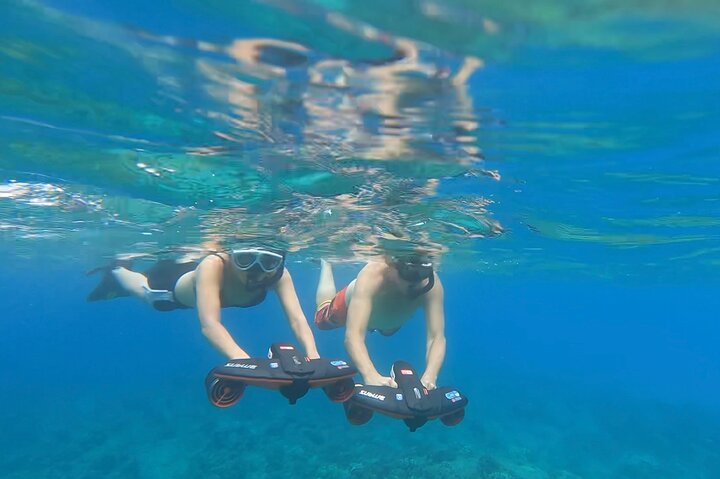
Puerto Rico Jet Snorkel with Turtles and Videos in San Juan
Jet snorkeling is exactly what it sounds like: a handheld motorized unit pulls you through the water so you cover way more ground without exhausting yourself. If you're not a strong swimmer, this is an important change, you glide past the reef while controlling your own speed. Same Escambrón location, same turtles, but the technology lets you see three times the area in the same 90 minutes. The downgrade: at $99 versus $39 for the standard tour, you're paying a premium for the propulsion unit and slightly smaller groups.
Good for: Non-swimmers, older adults, anyone who wants to cover maximum reef with minimum effort.
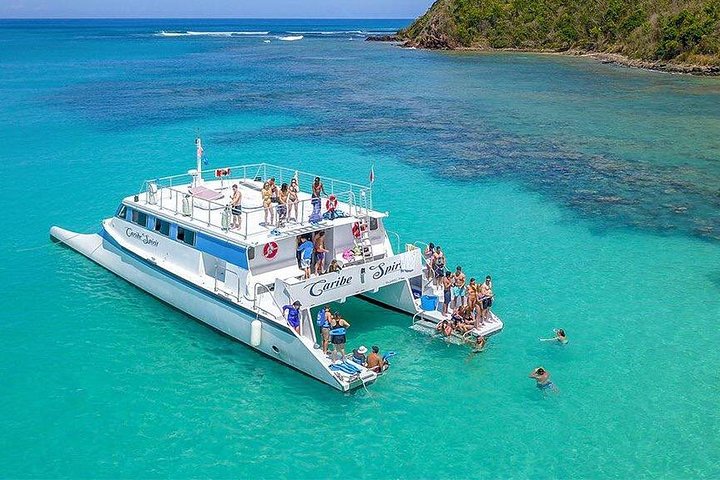
Culebra Snorkeling Tour by Catamaran from Fajardo
The full-day catamaran to Culebra is the premier boat-based option. You sail from Fajardo (about an hour east of San Juan), snorkel off the coast of Culebra, and typically visit Flamenco Beach, routinely ranked among the top beaches in the Caribbean. The 4.6 rating is solid but notably lower than the shore-based tours, and that's because of the variables: weather, seasickness, and overcrowding on peak days. At $180 per person, it's a significant investment. Book for a weekday in March or April for the calmest seas. Bring Dramamine even if you think you don't need it.
Good for: Confident swimmers, travelers with a full day to spare, anyone chasing postcard-grade reef and beach.
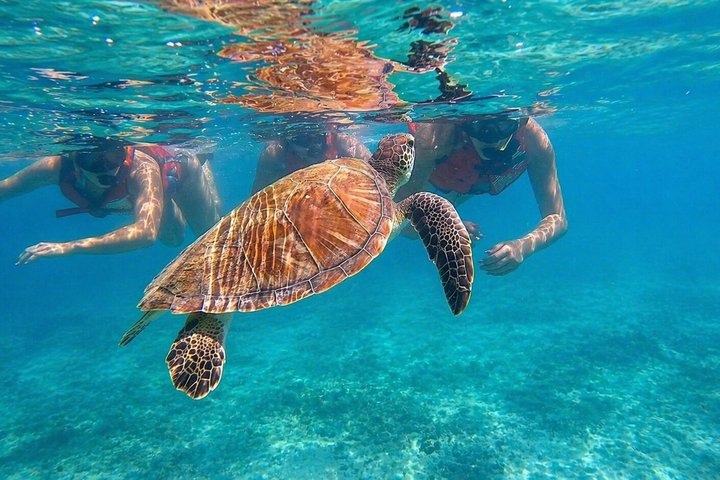
San Juan: Snorkeling with Turtles, Escambrón Beach
This 90-minute shore snorkel lists groups of up to ten, complimentary video and a minimum age of 12. Compare its departure times and current price with the other guided shore options.
Good for: Budget travelers, solo explorers, anyone who wants a small-group vibe without the premium price.
Two Snorkeling Experiences I'd Avoid
🚫 The Party Catamaran Disguised as a Snorkel Tour
You'll spot these by the marketing: unlimited rum punch, DJ on board, "party atmosphere." Nothing wrong with a booze cruise, but call it what it is. These tours often stop at a mediocre reef for 30 minutes (with half the guests too tipsy to swim properly), then the real activity is drinking and dancing. If you actually want to see marine life, this isn't it. The snorkeling is an afterthought. I've watched guides on these boats spend more time mixing drinks than pointing out wildlife. Pay $60 for the party if you want the party. Pay for a snorkel tour if you want snorkeling. Don't pay for both and get neither.
🚫 Afternoon Tours After a Heavy Rain
This isn't about a specific operator, it's about timing. When it rains hard in San Juan (and it rains hard, especially June–November), runoff from the city drains into the coastal waters. For 24–48 hours after a major storm, visibility at Escambrón drops to 2–3 feet, you literally cannot see your own fins. Reputable operators will cancel or reschedule. Less scrupulous ones will take your money and take you out anyway, because hey, "you still went snorkeling." Check the weather for the 48 hours before your tour. If it poured yesterday, push your booking back a day. Your $50 is better spent on literally anything else than snorkeling in chocolate milk.
Who These Snorkeling Tours Are NOT For
Let me be direct, because snorkeling brochures never are.
- People who panic in water deeper than their waist. Even shore-based tours take you into water 8–15 feet deep. If you're not comfortable floating, start with a swimming lesson, not a snorkel tour.
- Anyone expecting Jacques Cousteau-level reef. San Juan's reefs are nice, they're not the Great Barrier Reef. If you've snorkeled in Bonaire or the Maldives, adjust your expectations. The turtles are the star, not the coral.
- Cruise passengers with a 3-hour window. Between getting to Escambrón, checking in, the tour, and getting back, you need a minimum of 3.5 hours. With traffic, more. Don't risk missing your ship.
- People prone to severe seasickness. The catamaran tours involve 45–90 minutes of open-ocean sailing each way. If you get sick on a ferry, this will be worse. Stick to shore-based tours.
- Families with toddlers. Most operators have a minimum age of 6–8. Even if they accept younger children, a mask and snorkel on a 3-year-old rarely ends well. Wait a few years.
- People looking for a private, exclusive experience at budget prices. At $40–70 per person, you're in a group. If you want a private guide, expect to pay $150–300. That's just the economics of it.
Quick Checklist: What To Ask Before You Book
I've boiled this down to five questions. If the operator can't answer these clearly, move on:
- "Is video included, or is it an upsell?", Some charge $20–40 extra for GoPro footage.
- "What are your booking terms for bad weather?", Most reputable operators spell out exactly how bad weather is handled.
- "How many people per guide?", Acceptable: 6–12. Unacceptable: 20+.
- "Do you provide corrective masks for glasses-wearers?", Most don't. Bring contacts.
- "Where exactly do you snorkel?", If they can't name the beach, it's a red flag.
Frequently Asked Questions About San Juan Snorkeling
Where is the top spot to snorkel in San Juan?
For shore snorkeling, Escambrón Beach is the top spot, it's protected by a reef, has calm water, and you'll see turtles, tropical fish, and occasional rays. The rock reef on the east side of the beach is where marine life concentrates. For boat-accessed snorkeling, the waters around Icacos Island (off Fajardo, about 1 hour east) offer clearer visibility and more coral. Culebra's Flamenco Beach and Carlos Rosario are remarkable but require a full-day commitment.
Will I definitely see sea turtles?
Turtles are wild animals, so sightings are not guaranteed. Ask the guide about recent conditions and choose the departure that fits your plans; there is no verified sighting percentage for these tours. Compare the current listing for duration, group size and inclusions.
Do I need to know how to swim to go snorkeling?
You need to be comfortable in water but not necessarily a strong swimmer. Shore-based tours at Escambrón stay in relatively shallow water, and flotation vests are provided. For boat-based snorkeling, you should be a confident swimmer, conditions can be choppier and the water deeper.
What's the difference between shore snorkeling and boat snorkeling tours?
Shore snorkeling means walking in from Escambrón Beach for a 90-minute guided outing. Boat snorkeling uses a catamaran to reach offshore locations and takes 4–8 hours, with clearer water and healthier coral but more transit time and weather exposure. Compare the current card prices and transport details before choosing.
When is the worst time to go snorkeling in San Juan?
After heavy rain (visibility drops for 24–48 hours). During hurricane season afternoon storms. Winter swells (Dec–Feb) can make north-facing beaches rough. Sweet spot: calm mornings March–May or late summer mornings before afternoon rain.
What gear is provided on snorkeling tours?
All reputable operators provide mask, snorkel, fins, and flotation vest. Higher-end tours may include GoPro videos and wetsuit tops in winter. Ask before booking if video is included or an upsell. Most don't have corrective masks, bring contacts if you wear glasses.
Is the water cold in San Juan?
No. Water temperatures range from 78°F (winter) to 84°F (summer). You can snorkel comfortably in a swimsuit year-round. In December–February, some people prefer a rash guard or thin wetsuit top for longer sessions, but it's not necessary for a standard 90-minute tour.
Explore More
Related comparisons and guides:
- Turtle Snorkeling vs. Reef Snorkeling vs. Night Water Experiences: Which ...
- El Yunque Waterslide Tours vs. Standard Rainforest Hikes: Which Should You Book?
- Best Snorkeling Tours in San Juan: Compared & Ranked 2026
- Which El Yunque Tour Is Actually Worth Your Money?
- San Juan Turtle Snorkeling Tours Reviewed: Which One Actually Delivers in 2026?
- San Juan Guided Turtle Snorkel Tour with Complimentary Videos: Full Review
- Puerto Rico Jet Snorkel with Turtles: Full Review